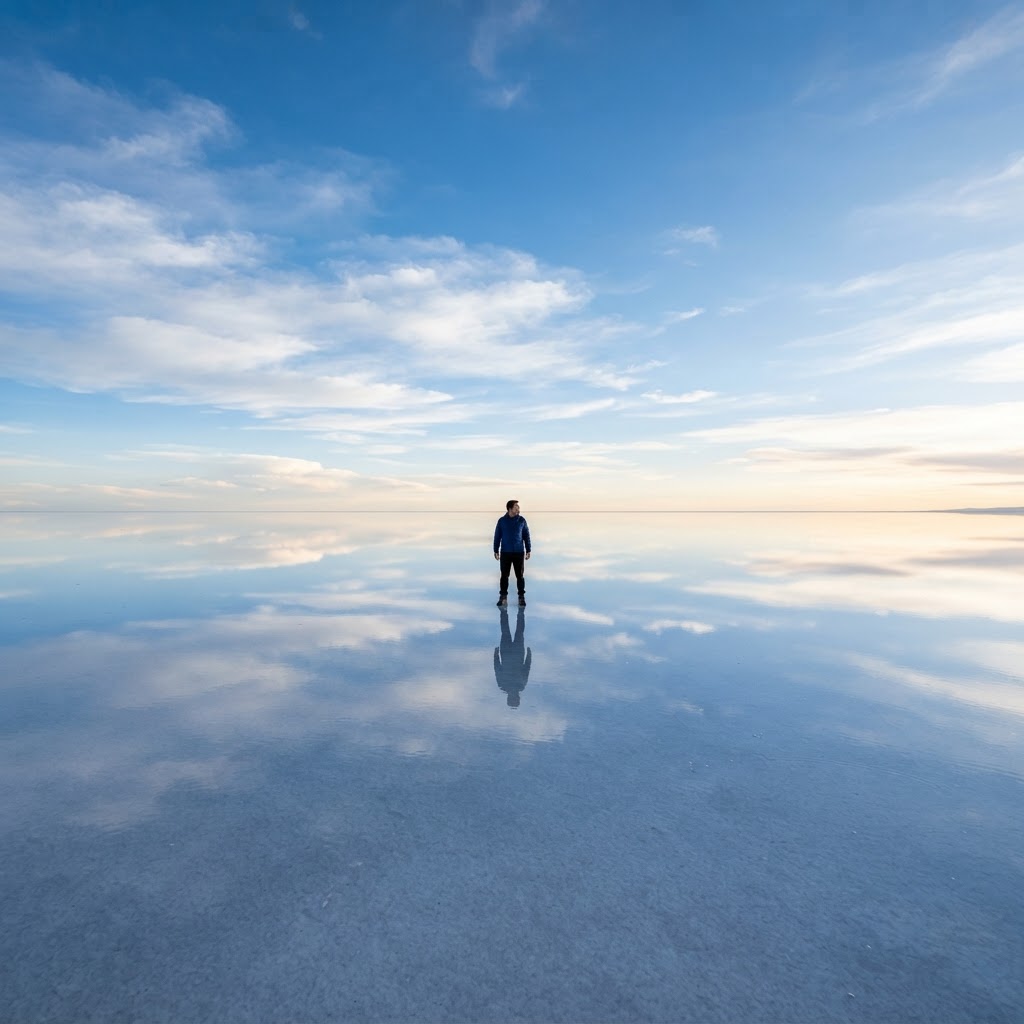
Imagine standing in a place where the earth dissolves into the sky, creating a perfect, infinite mirror that leaves you suspended in a dreamscape of white. Salar de Uyuni is not just a destination; it is the largest salt flat on earth, spanning over 10,000 square kilometers in the heart of the Bolivian Andes.
Whether you are chasing the legendary mirror effect or looking for the raw, rugged beauty of the Altiplano, this guide will help you navigate one of the most surreal corners of our planet. Prepare for an journey that defies your expectations.
At a Glance
- Visit March to April for the mirror effect or May to October for dry terrain.
- Embark on a multi-day 4x4 expedition across the high-altitude desert.
- Pack polarized sunglasses, heavy layers for sub-zero nights, and high-SPF sunblock.
- Utilize props to capture creative forced-perspective photos on the salt crust.
Why Salar de Uyuni Should Be on Your Radar
Salar de Uyuni is a testament to nature's capacity for creating alien landscapes. Formed by the prehistoric evaporation of massive lakes, the salt crust stretches as far as the eye can see, creating an endless, brilliant horizon.
- The scale: Covering 10,582 square kilometers, it is the world's largest salt flat.
- The geology: Witness a raw, jagged, and pristine salt landscape that remains largely untouched.
- The silence: Experience an utter, profound silence that is rare in the modern world.
- The sensory challenge: The thin, high-altitude air combined with the reflective surface creates a surreal sensory experience that forces you to slow down.
Best Time to Visit: Seasonal Insights
Choosing when to visit is the most critical decision for your expedition. Each season offers a completely different landscape and set of photographic possibilities.
The Wet Season (December to March)
- The mirror effect: A thin layer of water covers the salt, reflecting the sky perfectly.
- Photography: Ideal for those looking to capture dreamy, surreal landscape shots.
- Accessibility: Some islands may be inaccessible due to water coverage.
The Dry Season (May to November)
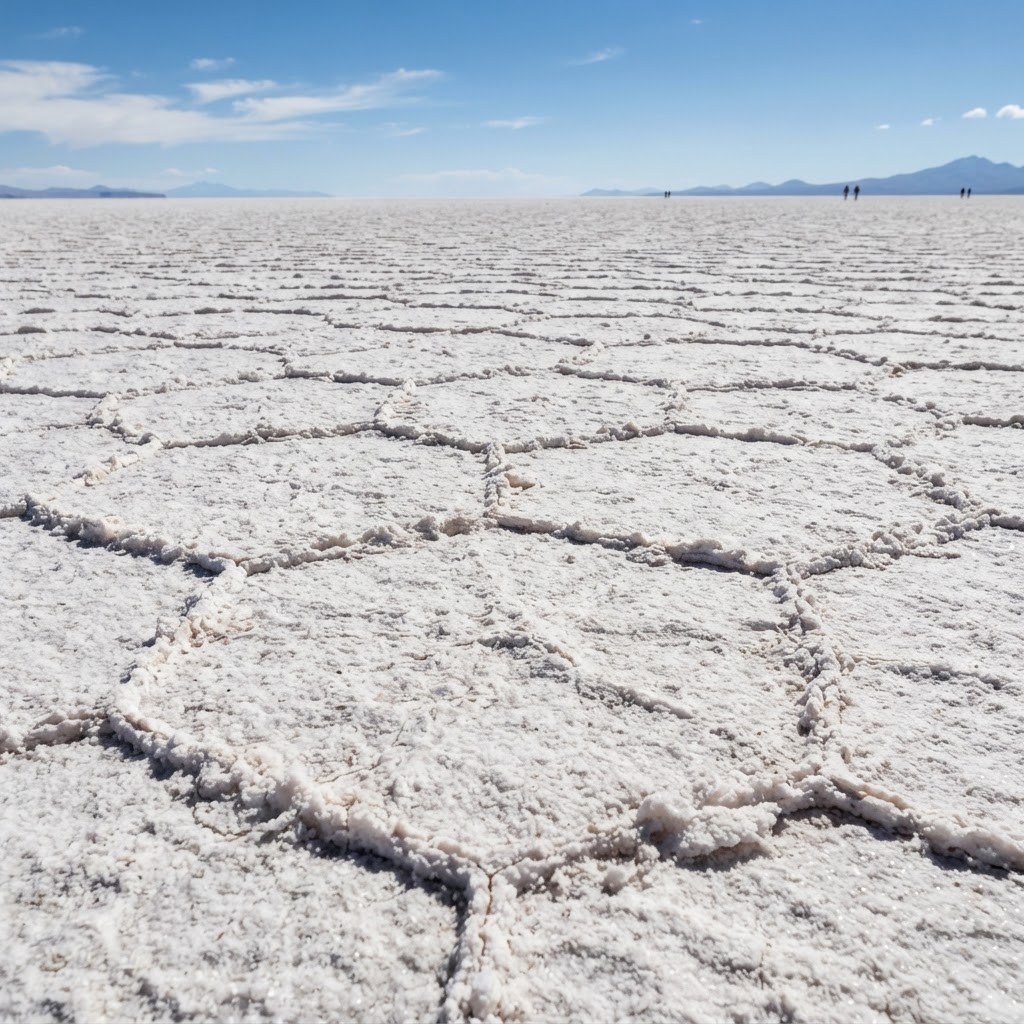
- The terrain: The ground becomes a solid, cracked hexagonal mosaic of white salt.
- Accessibility: Perfect for accessing the entire salt flat and remote lagoons deeper in the Eduardo Avaroa National Reserve.
- Exploration: Easier to venture further into the desert to visit distant peaks and cacti-covered islands.
Top Things to Do in the Andes
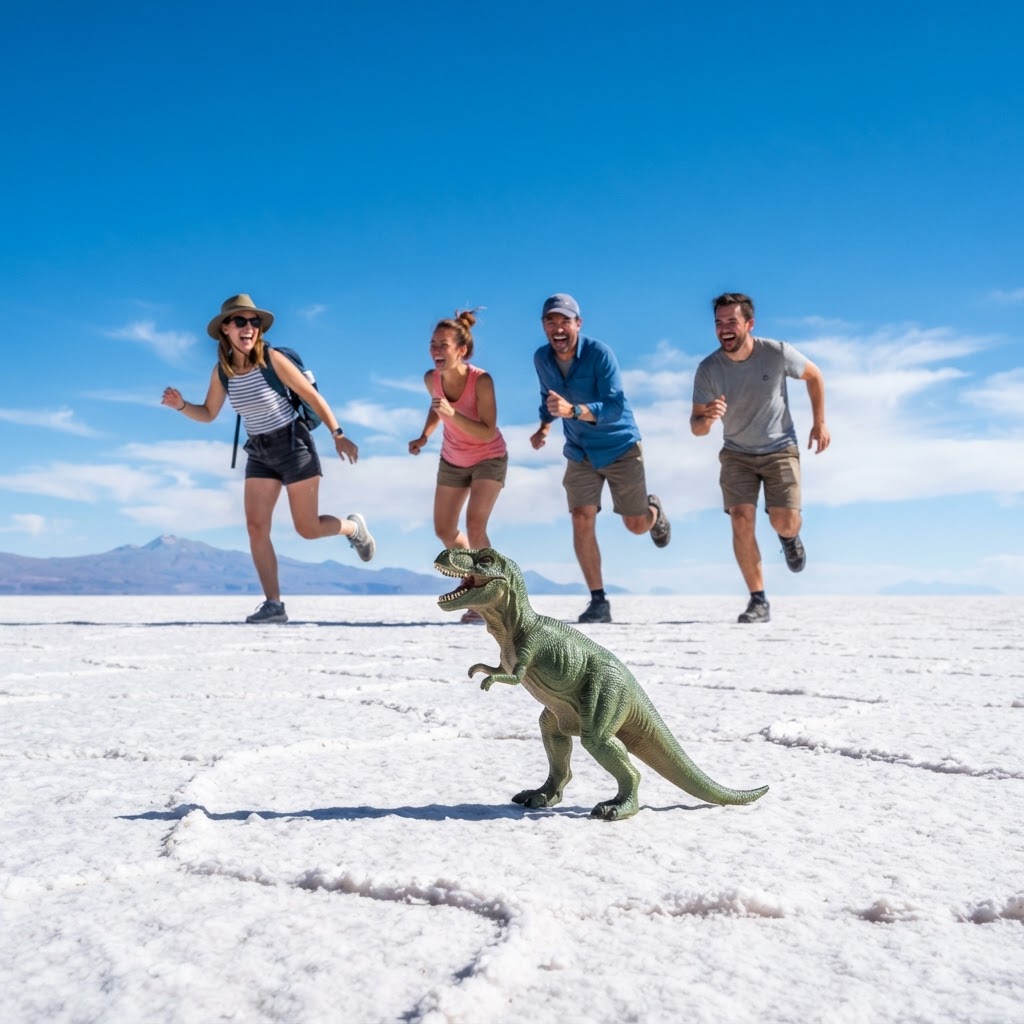
- Take a 3-day 4x4 expedition through the reserve for the full experience.
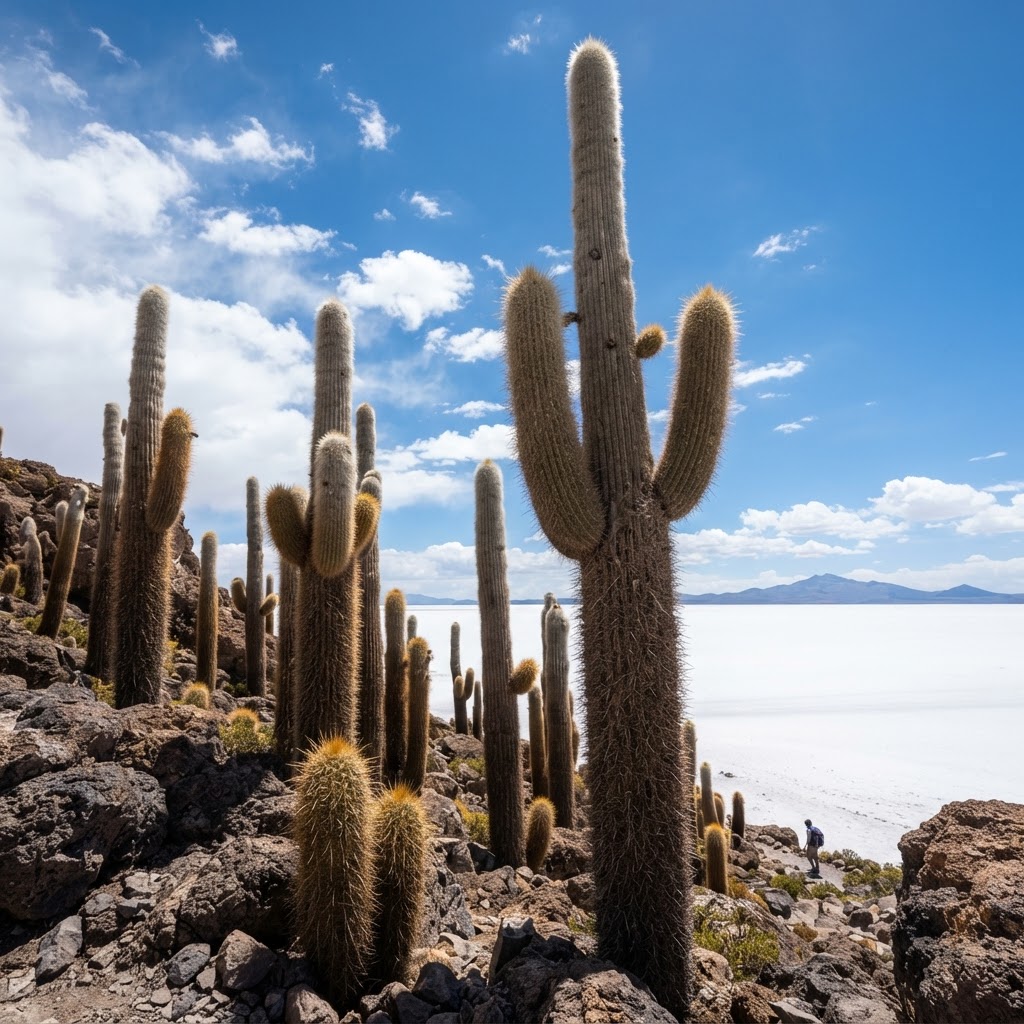
- Hike up Incahuasi Island to view the giant cacti and panoramic salt views.
- Explore the haunting, rusted metal skeletons at the Train Graveyard.
- Witness the vibrant pink plumage of flamingos at the high-altitude Laguna Colorada.
- Stargaze in the middle of the flats where light pollution is virtually non-existent.